
Note: Some links in this post are affiliate links. If you purchase through them, I may receive a small commission at no additional cost to you. I only share resources I’ve personally used or fully stand behind. Your trust matters more to me than any commission.
New to Todd Hampson? Start here.
I’m Todd Hampson. I write and illustrate books about the Bible, and most of them come back to two questions: whether Scripture can be trusted, and what its prophecies mean for how we live now. Some readers arrive with years of Bible study behind them and one area they’ve never felt sure about. Others have barely opened a Bible. Both are welcome here. The best first step depends on the question you’re carrying, so this page is sorted that way. If you want the longer story first, here’s a bit more about me.
Where to start
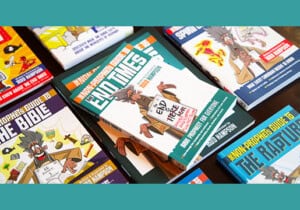
Start with the question you walked in with. If you want to know the Bible can be trusted, start with The Apologetics Guide to Trusting the Bible. If you want to understand prophecy and see how the whole story fits together, start with The Non-Prophet’s Guide to the End Times. If you lead a group and need something a whole room can follow, start with the Bible Clarity Toolbox. Every book is illustrated and written in plain language, so you won’t need a seminary background to follow any of them.
Free places to start
You don’t have to buy anything to get going. Each of these answers a real question in one sitting.
- Is the Bible reliable? The manuscript record, what archaeology keeps turning up, and prophecies you can date, laid out so you can check them yourself.
- Is Bible prophecy reliable? What fulfilled prophecy actually shows, and why it’s the most checkable evidence the Bible offers.
- Two shorter, more personal reads on the same questions: Why should I believe in the Bible? and Why should I believe in Bible prophecy?
- The Why Should I Believe? Quick Reference Guide A free one-page download on the three big questions people ask about the Bible, creation, and Jesus. Sign up on the home page and it lands in your inbox.
- Short teachings on YouTube Most of this material, a few minutes at a time.
Which reader are you?
Three kinds of people land on this page more than any others. Some want evidence before they commit to anything. Others trust the Bible but feel lost the minute prophecy comes up. And some are responsible for teaching other people, which raises the stakes on getting it right. Each needs a different first step.
If you want to know the Bible can be trusted
You want something you can check, and that’s the right instinct. Begin with The Apologetics Guide to Trusting the Bible. It covers manuscript evidence, archaeology, the Dead Sea Scrolls, fulfilled prophecy, and the resurrection in one illustrated volume, written for a reader coming to the material cold or a believer who’s never had the evidence in one place. Once that foundation is in place, the prophecy books make a lot more sense.
If you’d rather read first, the free pages on whether the Bible is reliable and whether Bible prophecy holds up when you check it cover the core of the case.
If Bible prophecy feels confusing
Begin with the map. The Non-Prophet’s Guide to the End Times lays out the whole prophetic storyline in order, and the illustrations carry the parts where dense paragraphs usually lose people. With the big picture in place, the individual books stop feeling like separate puzzles. From there, go to The Non-Prophet’s Guide to the Book of Revelation, which walks through Revelation chapter by chapter, and then to The Non-Prophet’s Guide to the Book of Daniel, which covers the prophecies Revelation assumes you already know.
If you lead a group
You need material a group can finish on schedule, and you’d rather not get caught flat-footed by the question from the back row. The Bible Clarity Toolbox is a membership library built for that. It includes a growing set of Why Should I Believe? leader guides, each with a big-picture framework, discussion questions, and calm answers to the skeptic questions that come up in real groups. Pair it with The Non-Prophet’s Guide to the End Times Workbook and your group has a discussion path it can actually finish.
What to read first, second, and third
If prophecy is what you’re after and you’d rather have one order, use this one.
- First: The Non-Prophet’s Guide to the End Times. The overview. Read it before anything else, whatever your background.
- Second: The Non-Prophet’s Guide to the Book of Revelation. It’s the book most people are curious about, and it reads far more easily once the framework is in place.
- Third: The Non-Prophet’s Guide to the Book of Daniel, the source of most of Revelation’s imagery.
If your question is about evidence more than events, put The Apologetics Guide to Trusting the Bible first and follow it with these three.
Where my other books fit
- The rapture, what it is and where Scripture describes it: The Non-Prophet’s Guide to the Rapture. For a free starting point, read Rapture Questions People Are Afraid to Ask.
- Heaven and what happens after death: The Non-Prophet’s Guide to Heaven.
- Spiritual warfare, explained without sensationalism: The Non-Prophet’s Guide to Spiritual Warfare.
- Teenagers and young readers: The Non-Prophet’s Guide to Prophecy for Young People.
- The hard questions people ask once they start reading: Answering Tough Questions About the End Times.
- Prophecy laid out in the order it happens: The Chronological Guide to Bible Prophecy.
- Quick answers and visual reference: A Quick Reference Guide to the End Times, A Visual Guide to the End Times, and The Ultimate Infographic Guide to the Bible.
Frequently asked questions
Which Todd Hampson book should I read first?
It depends on your question. If you want evidence that the Bible can be trusted, start with The Apologetics Guide to Trusting the Bible. If you want to understand prophecy, start with The Non-Prophet’s Guide to the End Times. Both are written for readers at any stage.
Where should I start if I know nothing about Bible prophecy?
The Non-Prophet’s Guide to the End Times. It gives you the whole storyline in order before any single book of the Bible gets examined in detail, which is the piece most people are missing. If your real question is whether the Bible can be trusted at all, start with The Apologetics Guide to Trusting the Bible instead.
What order should I read the Non-Prophet’s Guide books in?
End Times first, then Revelation, then Daniel. After those three, read the rest in whatever order your curiosity takes you. Each book stands on its own.
Do I need to read Daniel before Revelation?
No, though it helps. Revelation borrows heavily from Daniel’s imagery, so readers who know Daniel recognize more. Most people find Revelation easier to start with, then get more out of Daniel once they’ve seen where its pictures show up again.
Do the books work for personal study, or only for groups?
Both. They’re written to be read straight through by one person, and the workbook and Bible Clarity Toolbox add the discussion structure a group needs.
How are the illustrated guides different from regular commentaries?
A commentary explains the text verse by verse and assumes you can hold the structure in your head. These guides draw the structure. Timelines, charts, and cartoons give the explanation somewhere to attach, which is why readers who’ve bounced off denser books tend to finish these.
Are these books for serious students or beginners?
They’re written for beginners and used by both. A first-time reader can follow them, and longtime students still use the frameworks when they teach.
Pick your first book
One book is enough to start. Choose the one that matches the question that brought you here.
Browse all books on toddhampson.com
Keep learning
- Read the free pages on trusting the Bible and trusting Bible prophecy. They answer the most common questions in full before you buy anything.
- Browse every article on the site, from devotionals to prophecy Q&A.
- Dig in deeper to Bible Prophecy with Prophecy Pros Academy, a module driven curriculum from Todd and Jeff Kinley
- Get the Why Should I Believe? Substack newsletter, one clear question about the Bible every other week.