
Why should I believe in Bible prophecy?
If you have ever wondered whether faith requires you to switch off your mind, you are not the first. Prophecy is where a lot of us hit that question hardest, and it is also where the answer becomes the most checkable.
The short answer
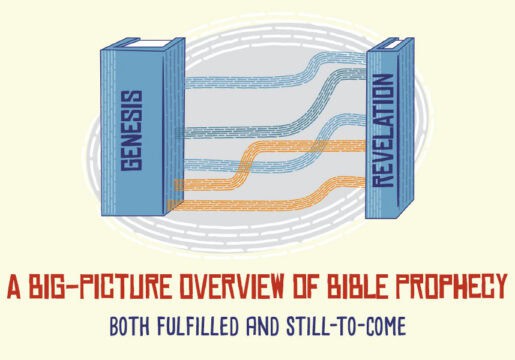
Bible prophecy is the one line of evidence God wrote down in advance so anyone could check it. About 28 percent of the Bible was prophecy when it was written, roughly 80 percent of it has already been fulfilled to the exact detail, and the fulfillment rate on everything past is 100 percent. That track record is what makes fulfilled prophecy the most compelling reason to trust that the Bible is from God.
A little about how I got here
I grew up completely unchurched and bought the world’s way of thinking hook, line, and sinker. I believed in evolution, thought the Bible was a book of fairy tales, and did not believe Jesus was even a historical figure. All of this as a young teenager.
Then I wound up in a Christian private school for three months and things began to change. As I heard bits and pieces of the biblical claims, I doubted them all, but I wrestled with them because some people I respected sincerely believed them. I could still explain most of it away in my head. But there was one thing I could not explain away. Fulfilled prophecy.
That was the key evidence that began to break down my barriers. It let me consider the existence of Jesus, the possibility of creation, and the rest of the Bible’s claims. It eventually led to my salvation a few months after I left that school.
I share that because if you have ever wondered whether faith requires you to switch off your mind, prophecy is a good place to start looking. It is the piece of evidence I could not get around. And it is the piece of evidence you can hand to almost anyone who asks.
The big picture, before we zoom in
Bible prophecy is God revealing history in advance. It is written down centuries early so anyone can check the record. And it is the one line of evidence the Bible offers that a skeptic can examine without first having to believe.
That last part is worth sitting with. Most claims about God require some measure of trust up front. Prophecy is different. You can read what was written, look at what happened, and decide for yourself.
What Bible prophecy actually is
Prophecy, in the biblical sense, is God’s description of history before it happens, given through a person as a prediction, a warning, or a directive. It is not vague poetry. It was held to an unforgiving standard.
Deuteronomy 18:22 draws the line clearly. If a prophet said something in the Lord’s name and it did not come to pass, that prophet had not spoken for God. Pass-fail, and the standard was set by God Himself.
Why that makes the Bible different
Anyone can write a religious book that tells you what to believe. Only One who stands outside of time can tell you what is going to happen a hundred, five hundred, a thousand years from now, and then have it happen exactly the way He said.
God does that in Isaiah 46:10: “I make known the end from the beginning, from ancient times, what is still to come.” He points to prophecy and says, in effect, watch how this plays out, and you will know who I am.
The down payment you can already count
About 28 percent of the Bible was prophecy when it was written. Roughly 80 percent of that has already been fulfilled to the exact detail, which leaves roughly 20 percent still future. The fulfillment rate on everything past is 100 percent.
When something delivers on 80 percent of what it promised with a perfect record, the remaining 20 percent stops feeling like a gamble and starts feeling like a matter of time.
Why this matters for you
Fulfilled prophecy is checkable. It is specific. It is on the record. And it turns a Bible you were told to trust into a Bible you have reasons to trust.
When you buy something valuable, you look for a certificate of authenticity, something built into the piece that says: this is the real thing, and here is how you can tell. Fulfilled prophecy is the Bible’s built-in certificate of authenticity. It is woven into the pages, waiting for anyone honest enough to check.
That changes how you read the whole book. You are no longer holding a religious text you have to defend. You are holding a document that has already delivered on hundreds of specific promises.
What prophecy is finally for
Prophecy is not primarily about the future. It is about a person.
Revelation 19:10 puts it plainly: “The testimony of Jesus is the spirit of prophecy.” Prophecy was given to prepare us, not to frighten us. It was given so that when the story unfolded, we would recognize Him.
Things are not falling apart. They are falling into place. And the Author has told us how it ends.
How the illustrated approach helps
Prophecy sounds abstract until you can see it. That is why every book in the Non-Prophet’s Guide series is built around visuals a first-time reader can actually follow. The prophecy chapter in The Apologetics Guide to Trusting the Bible walks through fulfilled prophecies on a timeline you can scan in one sitting, so the case for reliability is not a list of Scripture references but a visual you can hand to almost anyone.
The book that inspired this issue
The Apologetics Guide to Trusting the Bible gives fulfilled prophecy its own chapter, the manuscript evidence its own chapter, and the resurrection its own chapter.
- For the reader wanting evidence to check. Fulfilled prophecy laid out in traceable, verifiable detail.
- For the small group leader. Chapters short enough to teach in a single session, questions built in.
- For the ministry leader. One book, one shared vocabulary, one shared foundation to hand to your team.
Get it on Amazon · View on toddhampson.com
Related questions
- Is Bible prophecy reliable?
- Why is the Book of Revelation so confusing?
- Is the Bible reliable?
- Are we living in the end times right now?
Frequently asked questions
Is Bible prophecy actually reliable, or is it interpretation after the fact?
Reliable. About 28 percent of the Bible was prophecy when it was written, roughly 80 percent has already been fulfilled to the exact detail, and the fulfillment rate on everything past is 100 percent. The prophecies were written down centuries before the events they described, and the manuscript record confirms the writings predate their fulfillment.
Which Bible prophecies have been fulfilled?
Hundreds. Clearest examples: the four-empire sequence in Daniel 2 (Babylon, Medo-Persia, Greece, Rome), the messianic prophecies fulfilled at Jesus’ first coming, and the geopolitical prophecies concerning Israel that unfolded across the twentieth century.
Where should I start if I know nothing about Bible prophecy?
Start with the evidence for the Bible itself. The Apologetics Guide to Trusting the Bible covers fulfilled prophecy, manuscript reliability, and the resurrection in a single book, so the foundation is in place before the prophetic details start to matter.
Is prophecy meant to scare us or prepare us?
Prepare. Revelation 19:10 says “the testimony of Jesus is the spirit of prophecy.” Prophecy exists to bear witness to Jesus and help readers recognize Him when the story unfolds. Read calmly, it produces the opposite of anxiety.
Do the books work for personal study, or only for groups?
Both. Each book is structured to work as personal reading or informal group study. A separate workbook and a small-group study environment (The Bible Clarity Toolbox) exist for leaders who want a fuller framework.
Start with the Apologetics Guide
If prophecy was one of the things that opened the door for you too, I would love to hear about it. And if you know someone who is asking honest questions about the Bible, this is the book I would put in their hands.
A version of this post first appeared in the Why Should I Believe? newsletter. If you would like the biweekly newsletter delivered directly, subscribe here.
Note: Some links in this post are affiliate links. If you purchase through them, I may receive a small commission at no additional cost to you. I only share resources I’ve personally used or fully stand behind. Your trust matters more to me than any commission.