
Here is a number that surprises most people who have been in church their whole lives.
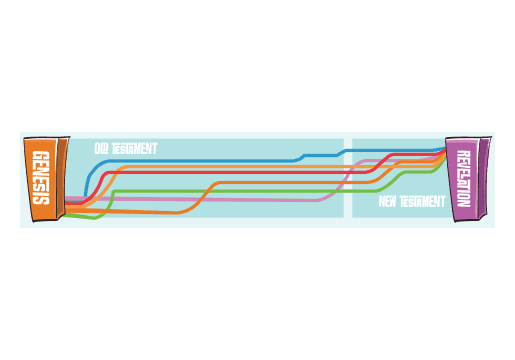
About 28 percent of the Bible was prophecy at the time it was written. Not a corner of it. Not an appendix at the back for people with charts. More than one page in four.
When I say that in a room, the reaction is usually some version of: then why have I heard almost nothing about it? It is a fair question, and the answer says more about us (and the topical neglect of the past 30 years) than about the Bible.
Why a quarter of Scripture is about what happens next
Prophecy is not in the Bible simply to give us a schedule of future things. It is there because of what kind of God is telling the story.
God repeatedly stakes His own credibility on this. Through Isaiah He says that what distinguishes Him from the idols is that He declares the end from the beginning — anyone can claim to be God, only one can tell you in advance what is going to happen and then have it happen. Fulfilled prophecy is the evidence He chose to leave.
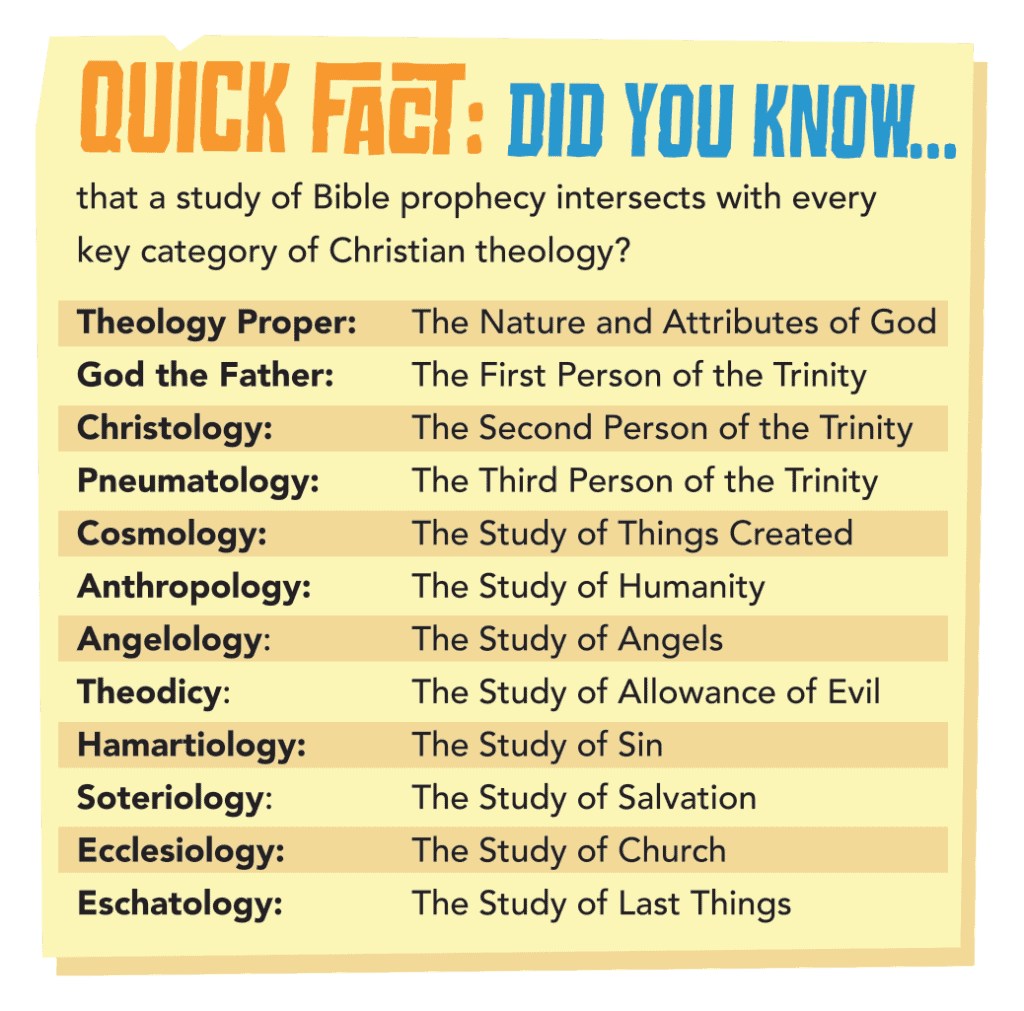
So the prophetic material is not a side channel. It is woven through the whole library. It is closer to the central nervous system of the Bible, connected to every major area of theology and holding a lot of it together. Pull it out and the story loses its direction: you are left with good teaching and no destination.
That is also why so much of it is already behind us. About 80 percent of biblical prophecy has been fulfilled, with a fulfillment rate on everything past of 100 percent. The portion still ahead — roughly 20 percent — concerns end-times events. Most of what we call prophecy is, at this point, simply history with a receipt.
Why you have heard so little about it
A few honest reasons, none of them good enough.
It has been handled badly in public. Date-setters and sensationalists have embarrassed the church often enough that a large number of pastors decided to steer clear, and steering clear became a habit, and the habit became a silence. Somewhere in there the glorious end of the story got benched.
It is also genuinely harder to teach. A passage about forgiveness lands in ten minutes. A passage about seventy weeks requires background, and background takes time most Sundays do not have. But this is not unique to Bible prophecy. All key areas of theology require study and hard work. When teachers neglect this all-important aspect of their calling, the Church suffers.
Also, there are different views about the timing and nature of end time events, and in many circles pastors and teachers have decided to avoid the topic. The problem is, there can only be one correct view. If we treated other areas of theology this way, we would be in bigger trouble.
Imagine if the early church (which largely debated the nature of the Trinity) just ignored the topic because there were different views. Imagine if the reformers of the 16th century ignored the doctrine of salvation simply because there were different views. Theology is complex, but it is knowable — and God expects us to have a grip on it (2 Timothy 2:15).
The cost of all that is real. A generation of believers has inherited a Bible with a quarter of it greyed out, and the greyed-out part is the one that answers: Where is all this going?
What it is actually for
Read the passages themselves and the purpose is hard to miss, because the writers keep telling us.
It is for confidence. The return of Christ appears in roughly one of every thirty verses in the New Testament and in 23 of its 27 books. That is not a doctrinal hobby, it is a drumbeat, and the beat is meant to steady you.
It is for readiness. More than fifty times Scripture tells its readers to be ready — and when you look at what ready means in those passages, it is almost never about information. It is about conduct. Stay awake. Live clean. Keep working. Love people. The practical instruction attached to prophecy is startlingly ordinary.
And it is for comfort. Paul finishes his teaching on the rapture (Greek word: harpazo) of the Church by telling the Thessalonians to “encourage one another with these words.” The passage we read at funerals was written as medicine. The vision that ends the Bible, after everything difficult, lands on a promise that every tear gets wiped away.
What to do with a quarter of your Bible
If this has been a blank space for you, you do not need a course. You need four weeks and a Bible.
Read both ends of the story in one sitting — Genesis 1 through 3 and Revelation 21 and 22. The Bible begins in a garden with God and people together and ends in a city with God and people together, and everything between is the work of getting back. Most of the intimidation dissolves right there.
Then read Matthew 24 whole, before you read anything about Matthew 24. Then read something already fulfilled — Daniel 9 is the one I would pick — and go look up what historians say about it. Then come back to Revelation and start at chapter 19.
That is thirty days. It will not make you an expert. It will make you someone who cannot be panicked by a headline, which is worth considerably more.
The part nobody tells beginners
You are allowed to still be working it out.
You can hold the center with real conviction — Christ is returning, God finishes what He started, evil does not get the last word — and still be forming your view on the sequence while you study. What none of us should do, and what a lot of us were quietly taught to do, is file the details under matters of opinion and leave them there. Only one view of each key detail can finally be correct. Working out which one is the job, and Scripture is the authority that settles it — not a system, a tradition, or whoever happened to teach you first.
That is not a burden. It is the ordinary Christian life. Every serious student of the Bible is formulating and refining their theology, and it is a life-long process.
What you are not required to do is leave a quarter of your Bible unread because someone once made the subject frightening. It was never meant to frighten you. The whole point is that the story has an author who already knows how it ends, and He thought you would be better off knowing too.
Read next: Bible prophecy for beginners · Is Bible prophecy reliable?
Go deeper: The Non-Prophet’s Guide to the End Times walks the whole picture in plain language with charts and illustrations throughout.